Custom Roller Conveyors: 5 Parameters to Prepare and Key Design Points
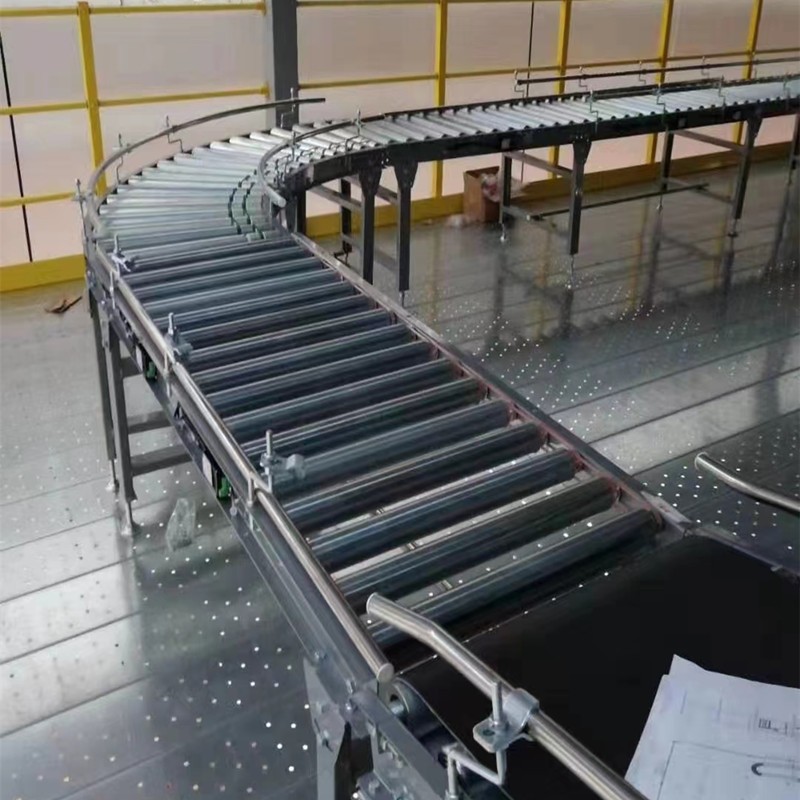
Quick answer: Before ordering a custom roller conveyor, prepare 5 parameters — item length, width and height; weight per unit; condition of the item base; any special environment; and gravity or powered drive. From these the manufacturer sets roller diameter and pitch, line width, layout and material. Roller lines suit items with a flat base; bulk, small or irregular items should travel in totes or on pallets; food plants should choose a full stainless frame and stainless rollers.
5 parameters to define first
| Parameter | Why it matters |
|---|---|
| 1. Item length, width, height | Sets line width, roller pitch and curve radius |
| 2. Weight per unit | Sets roller diameter, wall thickness and drive power |
| 3. Base condition | Whether the base is flat or has protrusions decides if rollers suit and at what pitch |
| 4. Special environment | Wet, wash-down, heat, dust, ESD — decides material and protection |
| 5. Drive type | Gravity (manual push or slope) or motor-driven |
It also helps to send conveying length, items per hour, upstream and downstream heights, and a layout drawing or photos — the proposal and quote will be more accurate.
Key design points
Roller pitch
The rule of thumb is that the item base should rest on at least three rollers at once — the shorter the item, the tighter the pitch.
Line width
Rollers are normally somewhat longer than the item is wide, leaving room for guides and drift; curves need extra width.
Layout
- By drive: gravity, powered and accumulating rollers;
- By layout: horizontal, inclined and curved roller conveyors;
- Special designs to customer requirements.
Material
Powder-coated or galvanised carbon steel for general plants; full stainless frame and stainless rollers for food.
Line length
Roller lines connect easily and can be combined with other conveyors and machines into complex material-handling systems; accumulation rollers allow product queuing. For chain-driven powered roller lines, chain tensile strength limits length, so single zones should not be too long — long lines are split into separately driven zones.
Basic structure
A roller conveyor consists of drive rollers, frame, supports and drive unit. It is simple, reliable and easy to maintain, can carry very heavy single items and withstands significant impact loads.
FAQ
Can a roller conveyor carry bagged goods?
Soft bags have uneven bases and can catch between rollers; put them in totes or on pallets, or use a belt conveyor instead.
What is the lead time for a custom roller conveyor?
Standard models usually take 15–30 days; custom projects are assessed by complexity and the lead time is confirmed with the drawings.
Related equipment
- Straight Roller Conveyor — the standard straight line
- Curved Roller Conveyor — 30° to 180° turns
- Chain Accumulation Roller Conveyor — zero-pressure buffering
- Got your parameters ready? Send your requirements for a proposal and quote.
Our engineers offer free selection and solution design