6 Belt Conveyor Safety Protection Devices: Function, Location and Working Principle
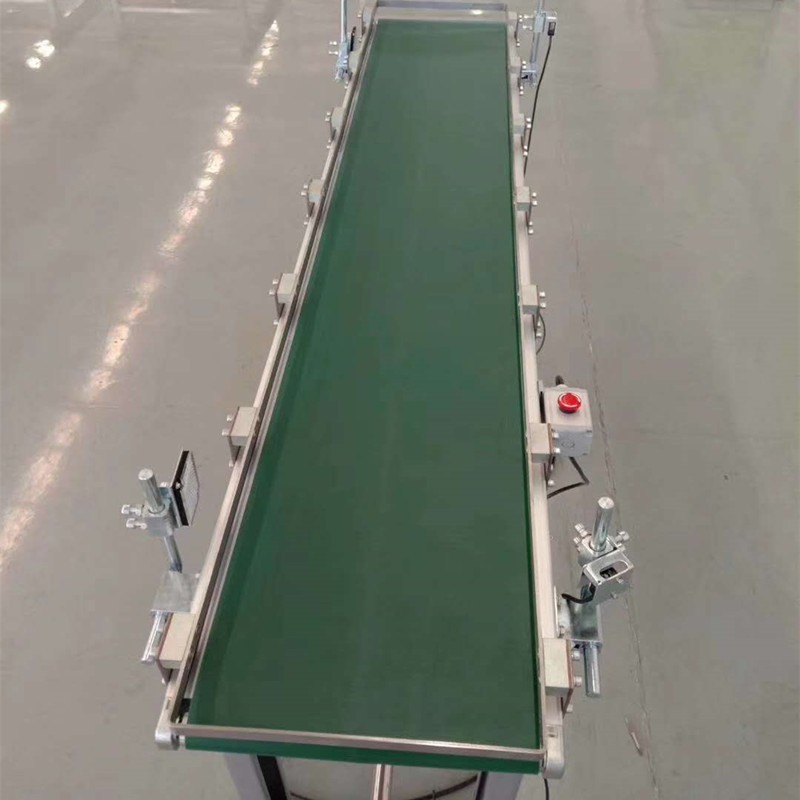
Quick answer: Belt conveyors commonly use six safety devices — slip detector, longitudinal rip protection, two-way pull-cord switch, belt tracking (anti-deviation) protection, backstop, and chute blockage switch. Belt conveyor design codes require tracking, rip, slip and pull-cord protection on every line; inclined conveyors also need a backstop or brake sized from a braking-torque check.
A belt conveyor consists of the belt, drive motor, supporting structure and control and protection devices, and several conveyors often cross to form a complete system. Its condition directly affects equipment and personnel safety, so reliable protection matters.
The 6 devices at a glance
| Device | Protects against | Location | Required |
|---|---|---|---|
| Slip detector | Slip between drive pulley and belt | At the belt / drive pulley | Yes |
| Longitudinal rip protection | Sharp objects slitting the belt | Between impact idlers at the loading zone | Yes |
| Two-way pull-cord switch | Emergency stop anywhere along the line | Intermediate frame or legs, walkway side | Yes |
| Tracking protection | Persistent belt drift | Both sides along the conveyor | Yes |
| Backstop | Inclined belt running back on stop | Pulley shaft or gearbox | Inclined lines |
| Chute blockage switch | Material piling up in the head chute | Side of the chute out of the material stream | As needed |
1. Slip detector
Slip occurs when drive-pulley speed and belt speed no longer match. There are two kinds:
- Low-speed slip — reduced pulley friction, a jammed belt or insufficient take-up tension; common.
- High-speed slip — usually on downhill conveyors when the motor is generating; rare.
How it works: belt speed is measured and compared with pulley speed. In normal running there is no difference; when belt speed rises more than 10% above normal or falls 25–30% below it, a slip alarm is raised and the control system can stop the conveyor — preventing slip-related accidents while avoiding unnecessary frequent braking.
2. Longitudinal rip protection
Sharp objects such as angular rock or long pieces of steel can lodge and slit the belt lengthwise, mostly at the loading point. Steel-cord belts are especially vulnerable because the transverse strength between cords is low, so they must be protected and monitored.
The system consists of rip sensors and a control box; one control box serves 4–6 sensors. Sensors are mounted under the belt between the impact idlers of the loading section, and the control box on a nearby vibration-free wall.
3. Two-way pull-cord switch
Pull-cord switches are mounted on the intermediate frame or legs, below the belt surface at a height staff can reach, along the walkway side — on both sides if there are walkways on both. Install one every 30–50 m, keep the cord parallel to the belt and minimise sag so the switch operates reliably.
4. Belt tracking protection
Mistracking damages belt edges, spills material along the line, stops normal operation and, in severe cases, can start a fire through friction. Besides good installation and training idlers or self-aligning idlers, fit tracking monitors along the line that stop the conveyor automatically on persistent drift.
5. Backstop
Above a certain incline a backstop is needed so the belt cannot run back and spill material when power is lost. It can be fitted on the pulley shaft, or a gearbox with an integral backstop can be used; inclined belt conveyors and bucket elevators generally require one.
| Type | Function / application |
|---|---|
| One-way clutch | Blocks rotation opposite to the normal direction |
| Overrunning clutch | Fitted between auxiliary drive and main gearbox to couple them |
| Roller backstop | For head pulleys on larger upward conveyors with inclines ≤18°; engages fast with minimal run-back |
6. Chute blockage switch
The head chute guides discharged material into the next machine, bin or conveyor and contains splash and dust. A blockage switch mounted on the side of the chute outside the material trajectory signals a stop when material piles up and presses on it.
FAQ
Does a small in-plant belt conveyor need all of these?
Short, light-duty workshop conveyors usually need emergency stops, guards and basic tracking and overload protection. Long, high-capacity or bulk-material conveyors should have all four mandatory protections.
How far apart should pull-cord switches be?
Typically every 30–50 m, so anyone along the line can stop it within reach — on both sides if there are walkways on both.
Related equipment
- Trough Belt Conveyor — high-volume bulk handling
- Anti-Deviation Belt Conveyor — built-in tracking
- Need protection devices specified for your duty? Contact our engineers.
Our engineers offer free selection and solution design